Eating Patterns
The Weekly Rhythm of Food Choices and Body Weight
An editorial record of how recurring food patterns and portion awareness shape weight over time.
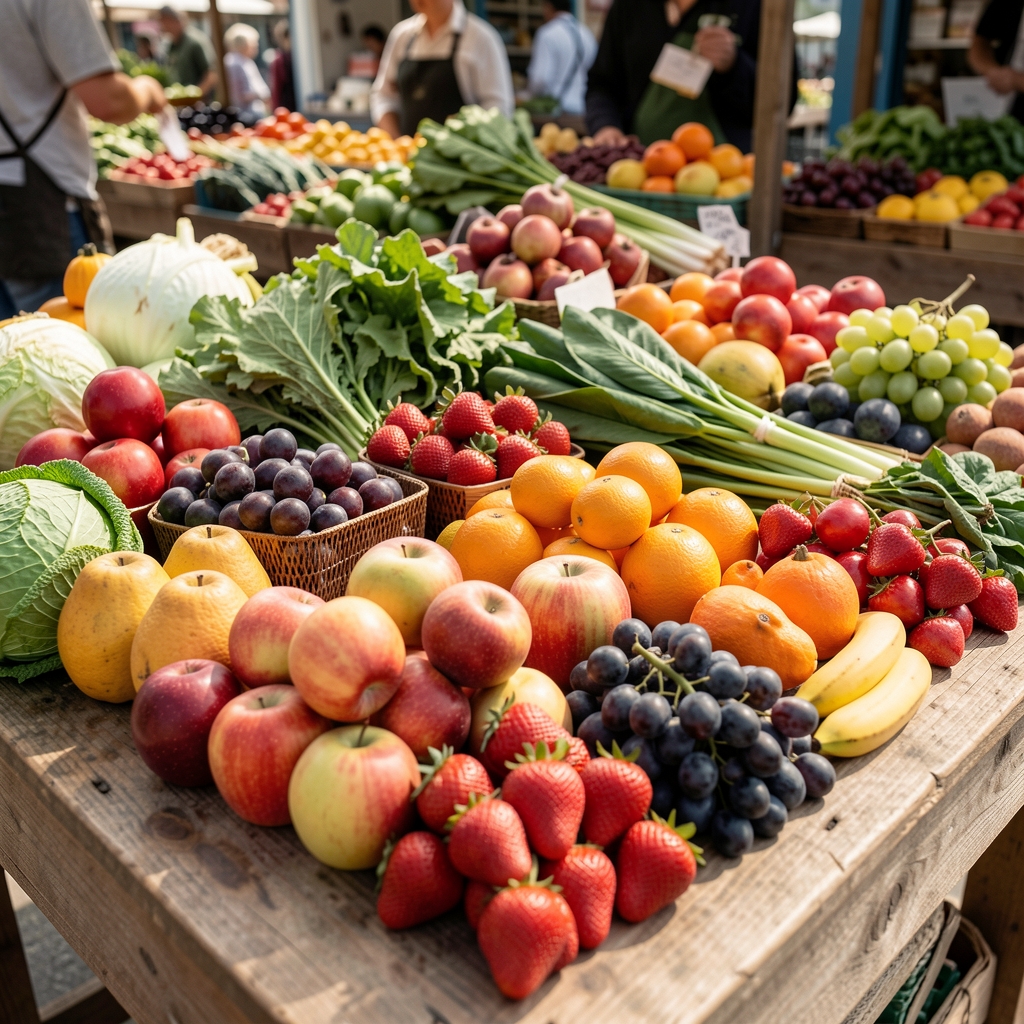
The calendar has always shaped the plate. Long before nutrition became a formal field of observation, cooks and households organised their eating around what the season offered. This record returns to that principle and examines it through a contemporary nutritionist's lens: how the rotation of seasonal vegetables and fruit through a weekly diet affects not only nutritional variety, but the relationship between food choices and body weight.
Seasonal eating is not primarily a philosophical position. It is a practical one. Vegetables and fruit that have reached their harvest peak in a given month tend to be denser in nutrients than produce that has been stored, transported over long distances, or cultivated under artificial conditions. The nutritional gap between an English winter squash in October and the same variety imported in June is not trivial — it is observable in flavour, texture, and composition.
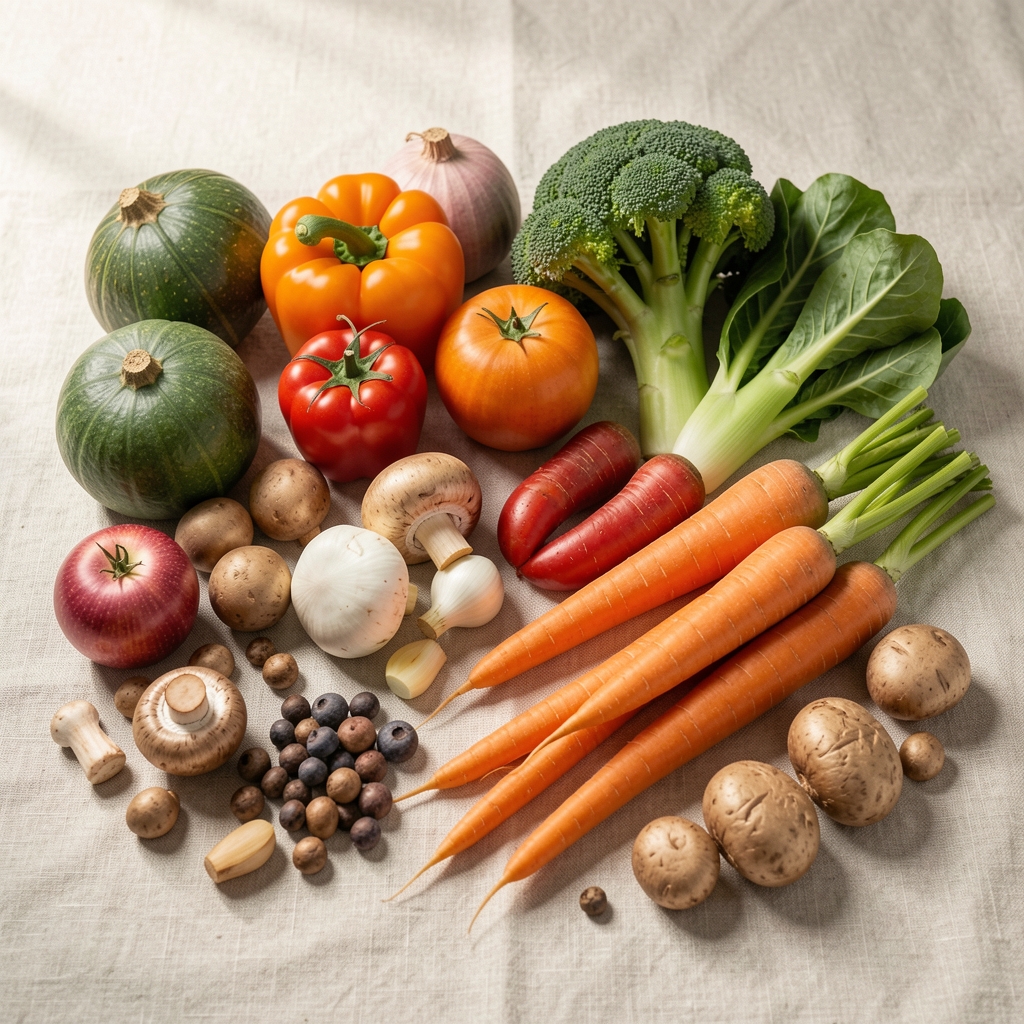
For a nutritionist observing eating patterns across seasons, the practical value of seasonality lies in the dietary variety it almost automatically generates. A household that follows the seasonal calendar will find its weekly plate shifting in composition every six to eight weeks: the root vegetables of autumn and winter giving way to the leafy greens of spring, and then to the broader colour spectrum of summer produce. This rotation introduces nutritional variety without requiring active planning.
Dietary variety — the range of different vegetables and fruits consumed across a week — is associated in nutritional literature with a more diverse intake of micronutrients and dietary fibre. A plate that includes five or six distinct vegetables in a week offers a different nutritional profile than one that includes the same two or three repeatedly, even if the total volume of vegetables is similar.
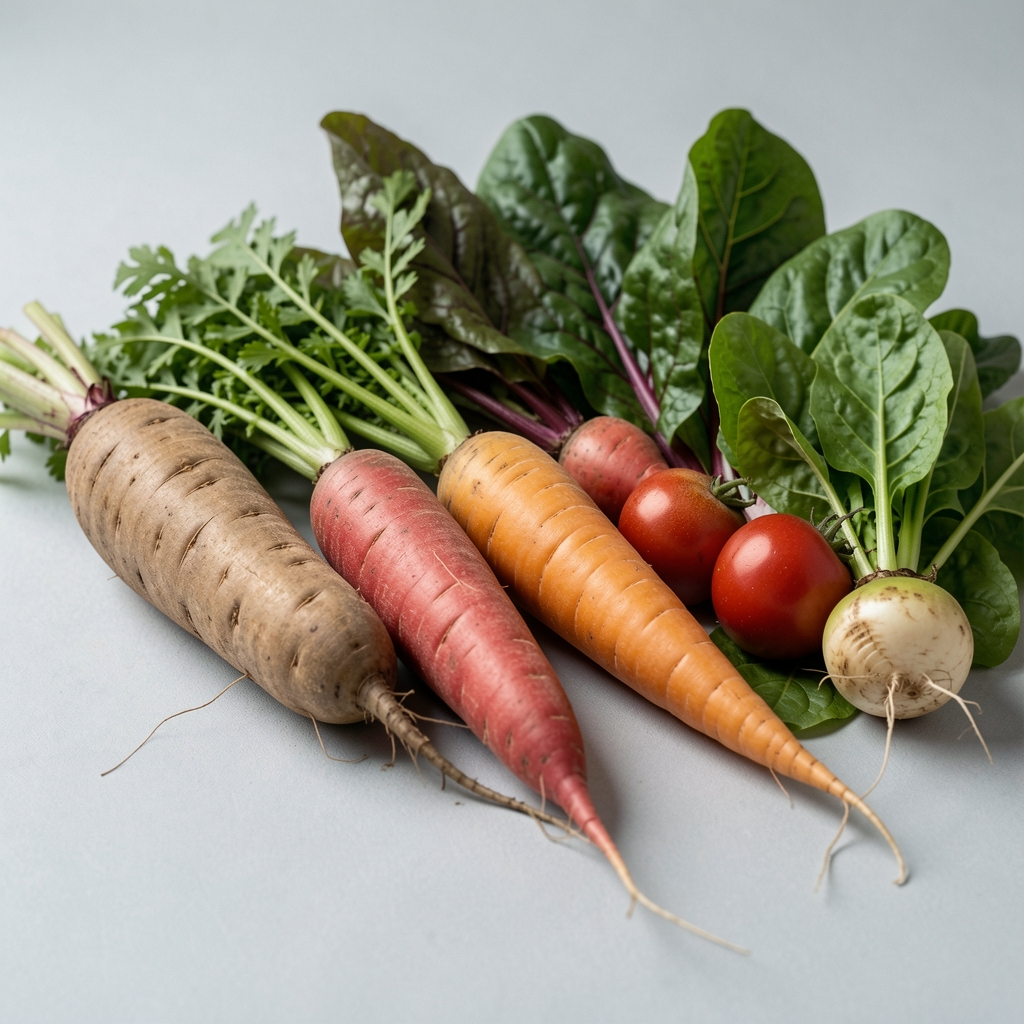
Seasonal produce, field record. Bremond Field Notes, February 2026.
The connection between seasonal vegetable consumption and weight balance is indirect but consistent. Seasonal vegetables are, as a category, high in dietary fibre and water content, and relatively low in energy density. A diet in which seasonal vegetables occupy a substantial portion of each plate will tend, over a week, to provide a considerable sense of fullness relative to the energy it delivers.
This is not a reductive observation — it is not suggesting that eating vegetables causes weight loss. It is observing that a plate architecture built around seasonal vegetables as a primary component naturally shifts the balance of the meal toward foods that contribute to satiety without high energy density. The effect on weight awareness, observed across a month of weekly records, tends to be one of greater stability rather than dramatic change.
Fruit follows a similar logic. The fruits available in summer — berries, stone fruits, soft fruits — are rich in water content and fibre. The fruits more available in winter — citrus, apples, pears — are similarly dense with fibre and provide a consistent source of sweetness that can reduce the inclination toward processed alternatives. Including two to three pieces of seasonal fruit in a day's eating provides nutritional variety that supports the overall balance of the plate.
“The season does not prescribe what to eat. It narrows the field of available choices in a way that tends, over time, to serve nutritional variety rather than constrain it.”
— Eleanor Whitfield, Bremond Field Notes
The rise of plant-based eating as a nutritional approach has brought renewed attention to the role of vegetables, legumes, and whole grains as the foundation of a meal. Within a seasonal framework, plant-based meals acquire an additional dimension: they respond to what is available locally and at peak quality, rather than relying on a fixed menu of ingredients that are regarded as interchangeable regardless of season.
A plant-based meal constructed around January seasonal produce in England might centre on Jerusalem artichoke, cavolo nero, leek, or parsnip. The same meal principle in June would be built around broad beans, peas, asparagus, and new potatoes. The structural approach to the meal — a generous portion of seasonal vegetables, a protein-rich whole food component (legumes, eggs, whole grains), a small amount of good fat — remains consistent. What changes is the palette of ingredients.
This approach to plant-based meals supports nutritional variety automatically, and aligns with the whole-foods approach documented elsewhere in this journal. It also tends to reduce reliance on processed food alternatives, which often appear in plant-based eating when seasonal fresh produce is not the organising principle of the meal.
The relationship between cooking and nutrition is a recurring theme in this journal. Cooking from scratch — preparing meals from whole, unprocessed ingredients — allows the cook to manage portion size, ingredient quality, and the balance between food groups in a way that prepared or processed foods do not permit. The seasonal kitchen adds a further layer: it invites the cook to engage with ingredients in their most nutritionally dense and flavourful state.
From a nutrition observation perspective, households that cook seasonally tend to report a greater engagement with vegetables as a meaningful component of the meal, rather than an obligatory side. When a winter squash or a spring bunch of asparagus is at its peak, it requires less culinary intervention to be satisfying — the quality of the ingredient reduces the impulse to compensate with fats, sauces, or processed accompaniments.
The weekly food rhythm documented in the first article of this journal — the observation that weekday consistency supports weekend stability — applies naturally to a seasonal cooking approach. A household with a weekly rhythm of cooking centred on seasonal vegetables tends to maintain that rhythm with less conscious effort, because the market or the greengrocer's shelf provides a natural menu.
The field notes for this piece were gathered over four weeks in January and February 2026. The observational framework tracked the weekly vegetable and fruit composition of meals across a range of households in London's EC1 area, focusing on those who reported purchasing primarily from local markets and independent grocers rather than supermarkets.
What the four-week record showed was a consistent pattern: households whose weekly shop included six or more distinct seasonal vegetables consumed, on average, a more varied range of nutrients and reported fewer instances of what they described as “overeating” compared to households whose vegetable intake was limited to three or fewer varieties, regardless of total vegetable volume.
This is a field observation, not a controlled study. The editorial standards of this journal preclude claims of causation from observational data. What the record offers is a directional signal: seasonal variety in vegetable and fruit intake appears associated with a greater sense of dietary satisfaction, which in turn appears associated with more stable weight patterns across the month.

Eleanor Whitfield is the founding editor of Bremond Field Notes. Her writing documents the intersection of seasonal produce, everyday cooking, and nutritional balance across London and beyond.
More from Eleanor →
An editorial record of how recurring food patterns and portion awareness shape weight over time.

A field-notes account of how active routines and mindful eating patterns intersect over the course of a week.